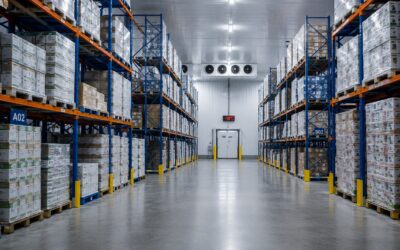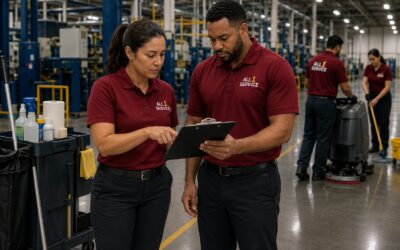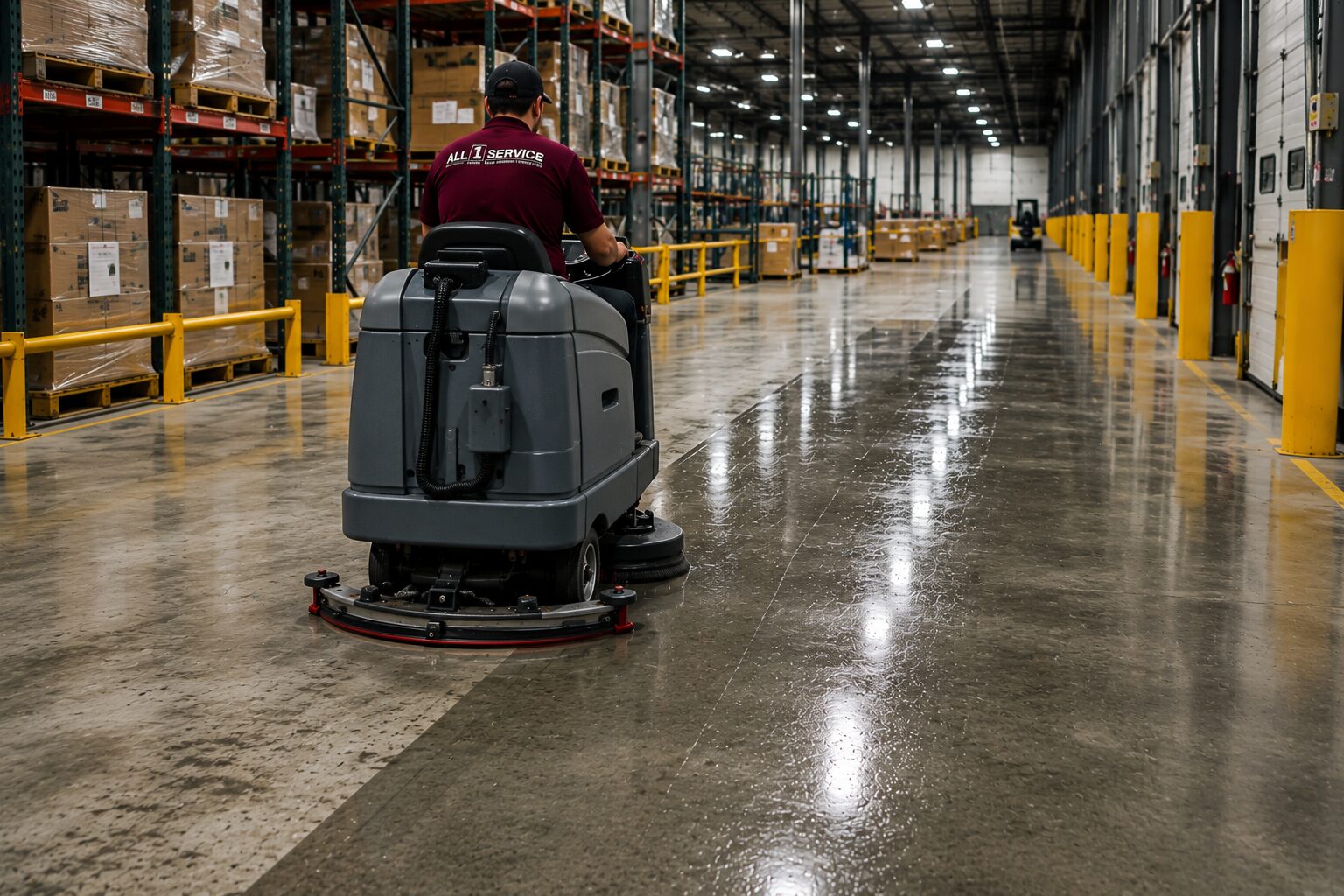
An effective warehouse cleaning program is not built around occasional deep cleaning or preparing for inspections. It is built into daily operations. The highest-performing facilities treat housekeeping as a core operational process, assigning clear responsibilities, maintaining consistent cleaning schedules, and conducting routine inspections to prevent problems before they occur.
The goal isn’t simply to keep the warehouse looking clean. It’s to create a safer workplace, improve productivity, protect inventory, extend the life of equipment, and ensure the facility remains inspection-ready every day. Below are some tips to help improve your warehouse cleaning program.
Assign Daily Responsibilities
Daily warehouse cleaning focuses on eliminating immediate hazards and maintaining high-traffic areas.
Every shift should include:
- Remove debris, shrink wrap, and empty pallets from aisles.
- Sweep warehouse floors and loading docks.
- Clean up spills immediately using the appropriate spill response procedures.
- Empty trash and recycling containers before they overflow.
- Restock restrooms and breakrooms as needed.
- Verify emergency exits, fire extinguishers, eyewash stations, and electrical panels remain unobstructed.
- Inspect high-traffic walkways for slip, trip, or fall hazards.
Daily housekeeping should become part of each team’s routine, not just the responsibility of the cleaning vendor.
Assign Weekly Responsibilities
Weekly warehouse cleaning tasks address areas that require more detailed attention but don’t need daily maintenance.
These typically include:
- Machine scrub warehouse floors.
- Dust racking, shelving, and storage areas.
- Clean loading dock plates, dock levelers, and receiving areas.
- Sanitize breakrooms, offices, and shared workspaces.
- Inspect waste collection areas and dumpsters.
- Remove cobwebs and visible dust from elevated surfaces.
- Review housekeeping inspection reports and resolve outstanding issues.
Weekly inspections help identify recurring problems before they affect safety or operations.
Assign Monthly Responsibilities
Monthly housekeeping focuses on preventive maintenance and long-term facility care.
Activities may include:
- High dusting of rafters, beams, ductwork, and lighting fixtures.
- Deep cleaning of warehouse floors and hard-to-reach areas.
- Pressure washing loading docks and exterior entrances.
- Cleaning equipment rooms and utility spaces.
- Refreshing floor markings and safety signage as needed.
- Reviewing housekeeping performance metrics and identifying improvement opportunities.
Monthly reviews also provide an opportunity to evaluate whether the current cleaning program continues to meet operational needs.
Establish Clear Ownership and Accountability
One of the biggest reasons warehouse cleaning programs fail is unclear responsibility. Employees assume someone else will address hazards, allowing small issues to become larger operational problems.
Successful facilities establish clear ownership by:
- Assigning housekeeping responsibilities by department or warehouse zone.
- Defining cleaning expectations for employees, supervisors, and cleaning partners.
- Providing regular housekeeping training.
- Reviewing housekeeping performance during supervisor meetings.
- Holding teams accountable for maintaining their assigned areas.
Warehouse cleaning/housekeeping should be viewed as a shared responsibility, not solely the responsibility of the janitorial contractor.
Develop a Consistent Cleaning Schedule
A documented warehouse cleaning schedule helps ensure critical tasks are completed consistently rather than only when issues become visible.
Your schedule should identify:
- Daily, weekly, and monthly cleaning tasks.
- Cleaning frequencies for each warehouse zone.
- Responsible individuals or vendors.
- Inspection dates.
- Corrective action deadlines.
Using standardized checklists helps ensure nothing is overlooked and creates consistency across shifts and multiple facilities.
Document and Measure Performance
An effective housekeeping program relies on documentation, not assumptions. Routine inspections provide visibility into recurring issues, demonstrate due diligence, and support continuous improvement.
Maintain records such as:
- Daily housekeeping inspections.
- Corrective action logs.
- Spill response reports.
- Cleaning schedules.
- Vendor performance evaluations.
- Facility audit scores.
Tracking these activities over time helps identify trends, improve accountability, and ensure the warehouse remains clean, safe, and inspection-ready throughout the year.
Key Takeaway
The strongest warehouse cleaning programs don’t rely on employees remembering what needs to be cleaned. They rely on standardized procedures, scheduled inspections, documented follow-up, and shared accountability. When housekeeping becomes part of your operational culture rather than an occasional task, your facility is better positioned to improve safety, maintain compliance, increase productivity, and deliver a consistently professional environment.